*Call to the Portuguese national landline network
- Vila do Conde: Mon to Fri 8.30am to 8pm, Sat 8am to 1pm
*Call to the Portuguese national landline network
*Call to the Portuguese national landline network
*Call to the Portuguese national landline network
Being told you have a disc herniation and hearing the word “surgery” in the same appointment is frightening for anyone. The good news is that, in most cases, surgery is not the first step, and often it never becomes necessary at all.
In short
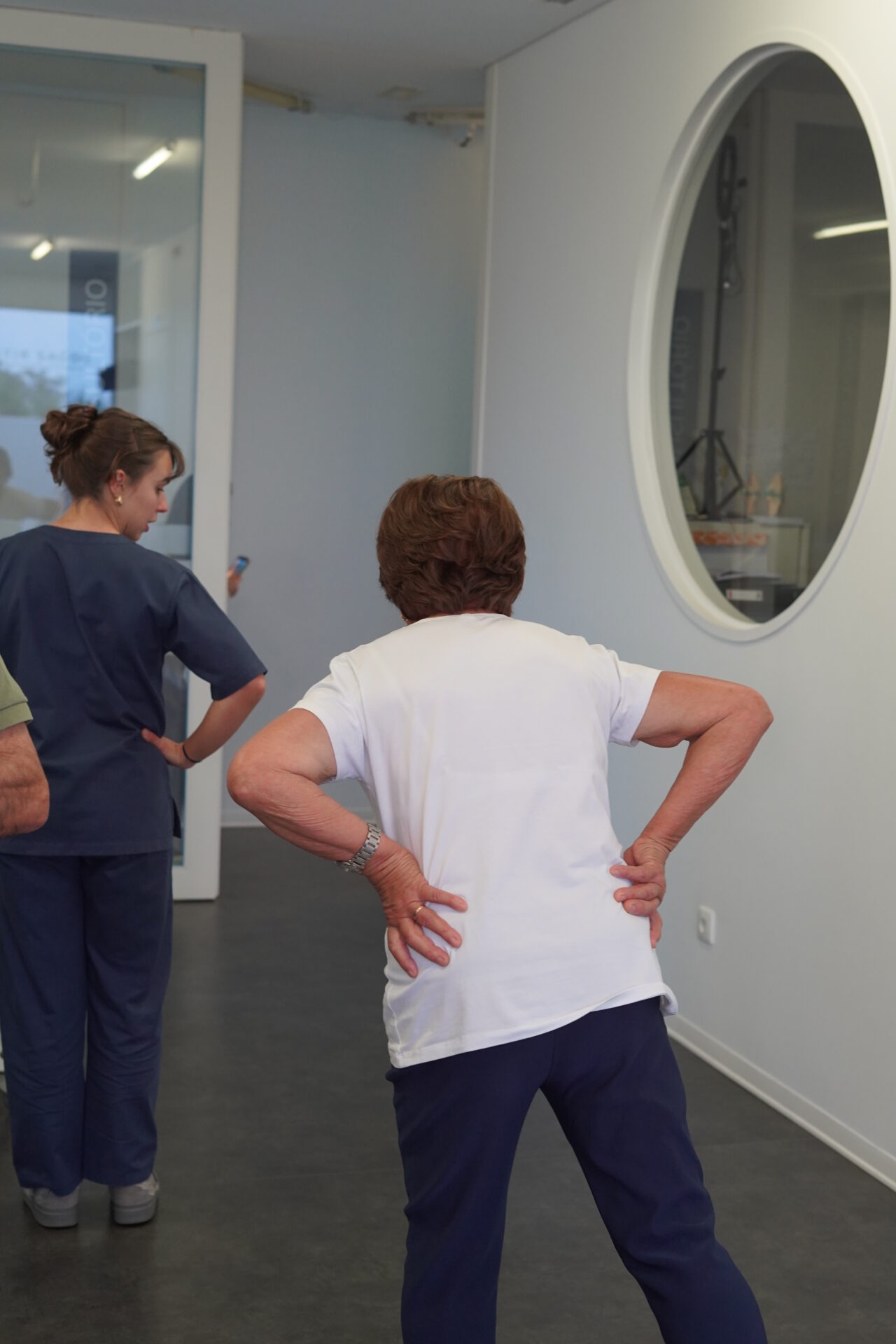
At Sentir Saúde, in Vila do Conde, we bring together advanced physiotherapy, therapeutic exercise and technology such as MBST therapy to control pain and restore function, without going straight to the operating theatre. This article explains how, and when surgery genuinely is the right choice.
The priority is always to avoid surgery where it is safe to do so. In most cases a disc herniation responds to well-managed conservative treatment. Surgery is reserved for the specific situations in which it is truly needed.
Between every two vertebrae there is an intervertebral disc that works as a shock absorber: it has a tough outer ring and a gel-like centre. When that centre shifts and presses on the ring, or breaks through it, you have a disc herniation.
The problem is rarely the disc itself. It is what the disc touches. When the herniation compresses a nerve root, the pain radiates: low back pain running down the leg, the familiar sciatica, or neck pain running down the arm. Pins and needles, numbness or loss of strength may come with it. And there is one detail that surprises many people: some herniations cause no pain at all and are only found by chance on a scan.
It is the question almost everyone asks us: “will I have to be operated on?” In most situations, the answer is no. Imaging studies that follow patients over time show that a significant proportion of herniations regress spontaneously over weeks to months, and the likelihood is higher in the larger ones (extrusions and sequestrations).1
For the majority of cases, then, the first line of treatment is conservative: understanding the problem, controlling the pain, returning to guided movement and doing physiotherapy. A landmark trial comparing surgery with prolonged conservative treatment for sciatica found no meaningful difference in outcomes at one year.2 Surgery is reserved for specific situations: disabling pain that does not settle after several months of well-delivered treatment, progressive neurological decline, or red-flag signs.3
Treating a disc herniation without surgery is not "wait and see". It is active intervention, with a plan.
At Sentir Saúde we combine several fronts in a single programme.
MBST is a non-invasive, painless technology that uses magnetic resonance principles to stimulate tissue. It is applied in various degenerative conditions of the spine and joints, with the aim of reducing pain and supporting the environment in which tissue recovers. It is not a magic wand, and we do not promise guaranteed results: the response varies from person to person. Read more about MBST therapy and the technology we use.
This is the core of the treatment. Advanced physiotherapy combines manual therapy, progressive therapeutic exercise, high-power laser and focused shockwave therapy to control pain and, above all, to get you moving safely. The aim is not simply to take the pain away, but to recover strength, mobility and confidence in movement, so the problem does not come straight back.
A herniation rarely appears out of nowhere. It is often linked to how we lift, sit and move over the years. In our Spine Unit we work on postural re-education, core strengthening and everyday ergonomics, to reduce the load on the discs and prevent relapses.
Some cases are harder: persistent pain, several attempts at treatment without success, or people travelling from another city or country who need to make up time. For them we created Premium Recovery, an intensive rehabilitation programme with closer follow-up. For those coming from abroad, we begin by reviewing your imaging and speaking by video call.
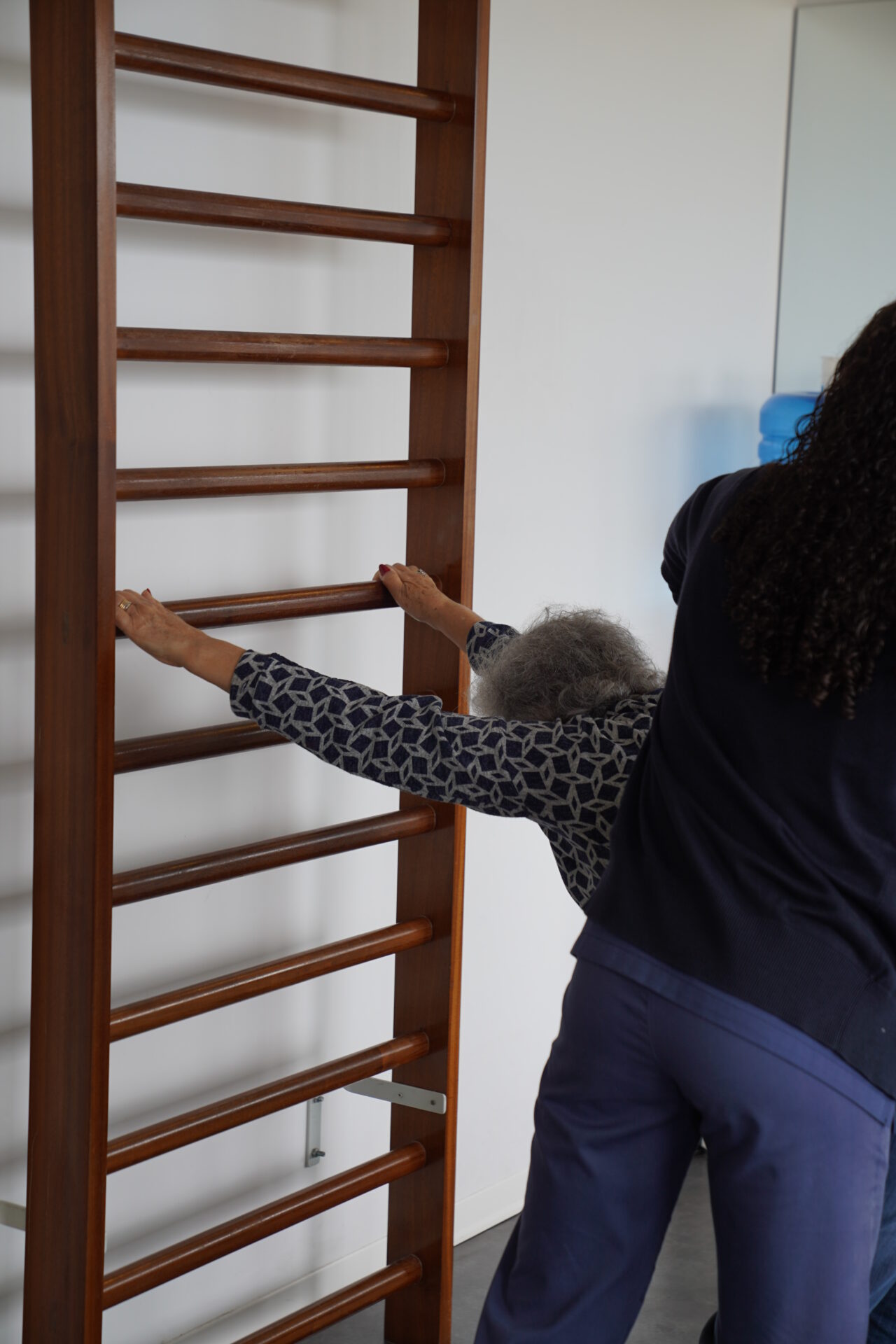
MBST is used as support, always within a wider plan of physiotherapy and exercise, never on its own. Our article on MBST therapy in Portugal explains how a session works.
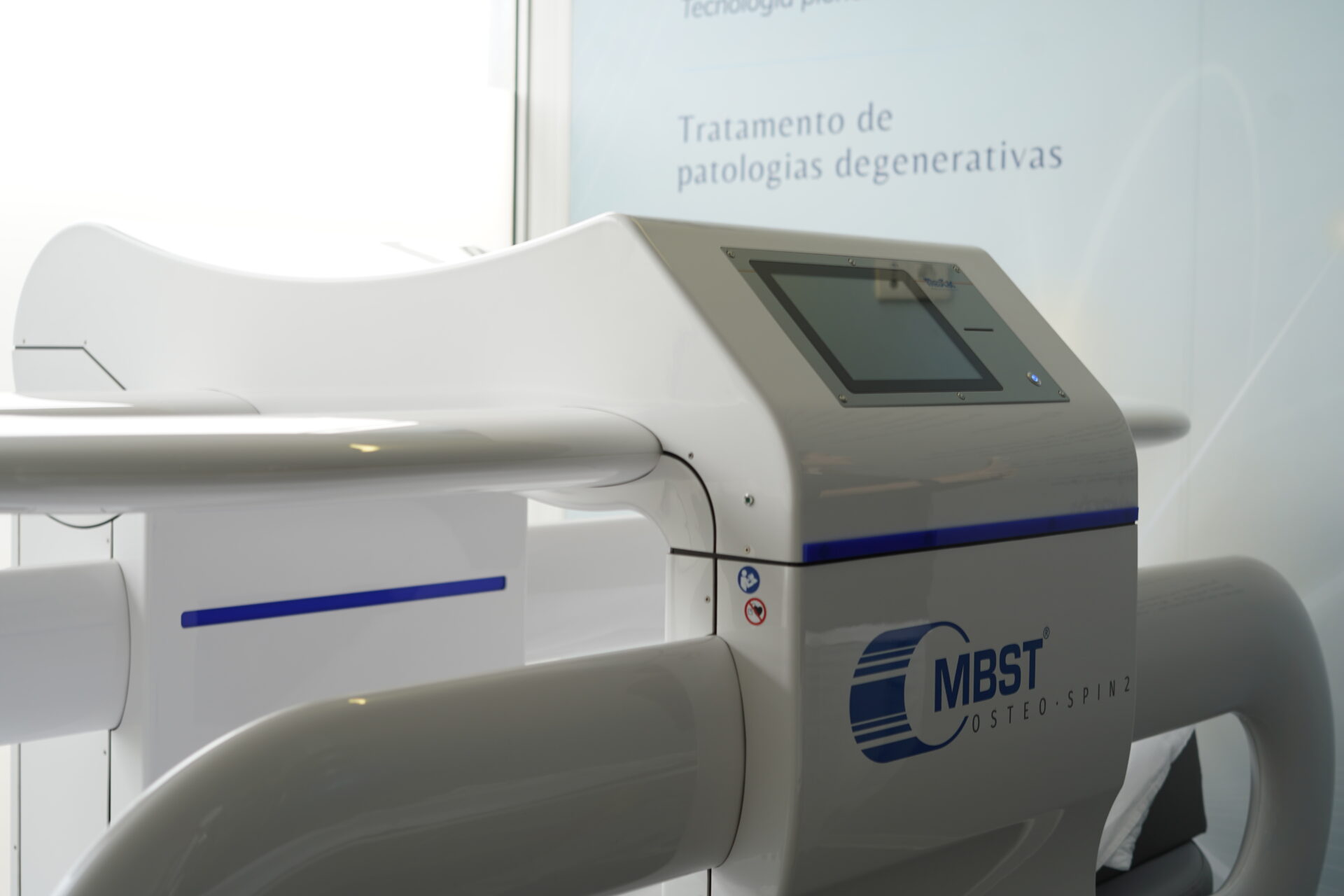
We go through your history and any imaging you already have, such as an MRI scan, and carry out a detailed physical assessment.
We set realistic goals and choose the right therapies for your case.
Physiotherapy, exercise and, where indicated, MBST, working together.
We measure progress and adjust the plan. Nothing is fixed.
You leave knowing what to do, and what to avoid, to keep the results long term.
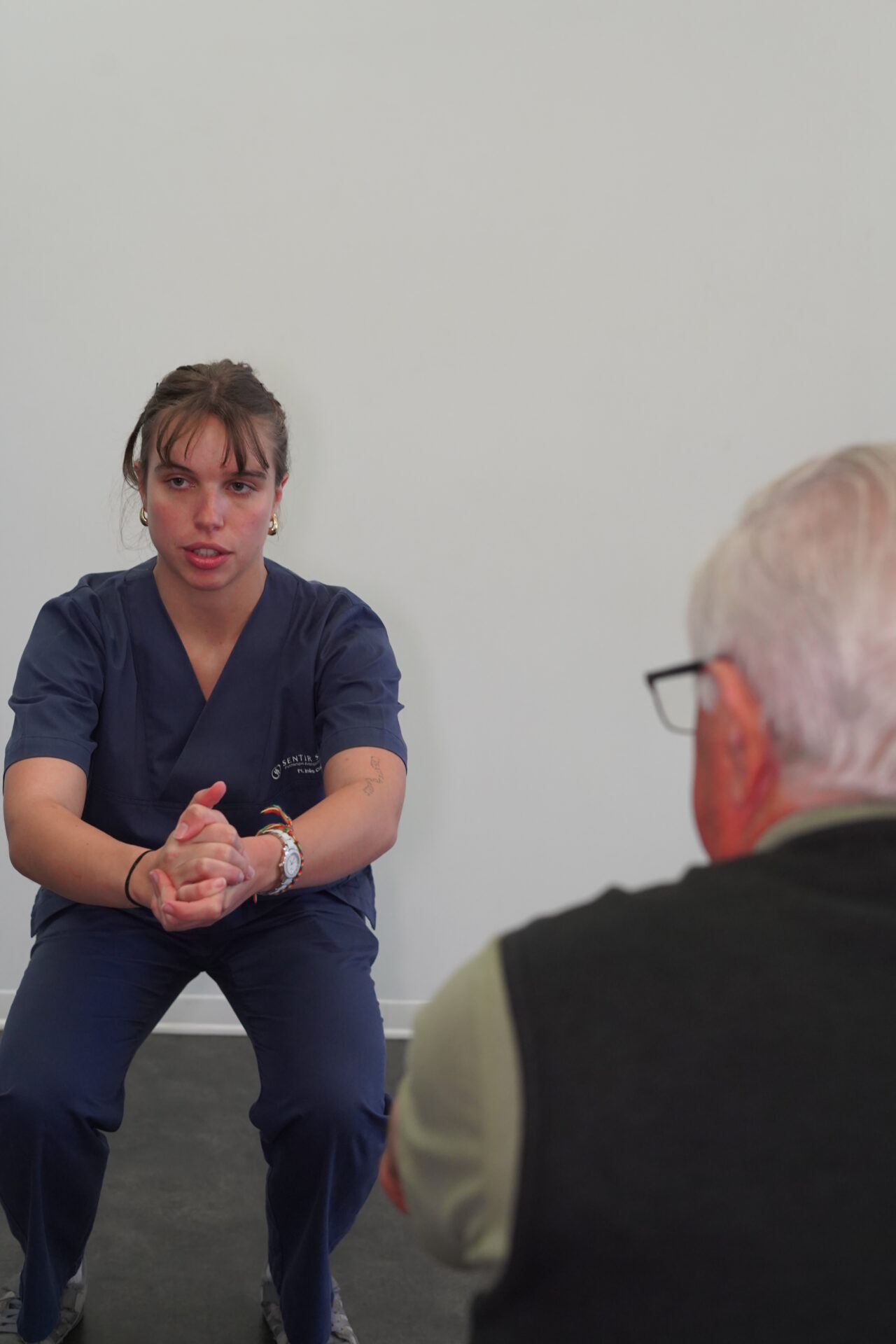
The vast majority of disc herniations are safe to treat without surgery. But there are signs that call for urgent medical assessment.
Outside these cases, there is almost always room to treat conservatively.
Yes, in most cases. The body reabsorbs part of the herniation over time, and a good physiotherapy programme supports and consolidates that recovery. Surgery is reserved for specific situations.
MBST is used as support in degenerative conditions of the spine, always within a wider plan. Results vary and are assessed case by case. We do not promise miracles; we assess whether it makes sense for you.
It does not hurt. It is a non-invasive therapy: you lie down comfortably throughout the session, with no needles and no discomfort.
It depends on your case, how long the problem has been there and how you respond to treatment. We give an estimate at the initial assessment and reassess as we go.
Many of the people who come to us are in exactly that position. The difference usually lies in the detailed assessment, in combining several therapies and in close follow-up, rather than isolated treatments.
For cases that justify an intensive programme, yes. Premium Recovery was designed for this, including reviewing your imaging beforehand by video call.
Only a clinical assessment can say with any accuracy. In most cases there is room to try the conservative route first. When surgery really is necessary, you will know that clearly too.
If you have a disc herniation and want to understand whether you can avoid surgery, the first step is simple: a clinical assessment. Our team in Vila do Conde sees people from across Portugal, and international patients too.
Avenida de Portas Fronhas 300, 4480-004 Vila do Conde, Portugal · geral@sentirsaude.pt
This article is for information only and does not replace an individual consultation or clinical assessment. Every case is unique and should be assessed by a healthcare professional.