*Call to the Portuguese national landline network
- Vila do Conde: Mon to Fri 8.30am to 8pm, Sat 8am to 1pm
*Call to the Portuguese national landline network
*Call to the Portuguese national landline network
*Call to the Portuguese national landline network
Between the diagnosis and a knee replacement there is, in most cases, a long road. And it is a road backed by solid scientific evidence, not a stopgap while you wait for an operation.
In short
“You have wear and tear in your knee. One day you will need a replacement.” It is one of the things patients hear most often, and it is only half true. Osteoarthritis does not disappear and does not regenerate. But between the diagnosis and surgery there is, in most cases, a long road.
This article sums up what the research shows about conservative treatment for knee osteoarthritis, which options are available in Portugal and how we decide, case by case, what makes sense.
Knee osteoarthritis, or gonarthrosis, is the gradual wearing of the joint cartilage, together with changes in the bone, the ligaments and the surrounding muscles. It is one of the most common rheumatic diseases in Portugal: EpiReumaPt, the largest national epidemiological study of rheumatic diseases, ranks it as the third most common, affecting around 12% of the adult population.
Some knees show marked wear and little pain; others show mild changes and a lot of limitation. That is why a treatment plan is built on an assessment of the person, not just on the scan report.
This is the point on which practically every international guideline agrees: OARSI, the UK’s NICE and the European EULAR. First-line treatment rests on three pillars. It is not what most people expect to hear, but it has the highest level of evidence and, in many cases, makes the biggest functional difference in the medium term.
Cochrane systematic reviews show that exercise reduces pain and improves function, with effects comparable to some anti-inflammatories and without their risks. The quadriceps works as a shock absorber: when it loses strength, the joint takes more load, not less.
Many people stop walking because they believe movement “wears out” the joint even more. The effect is the opposite of what they want: less movement means less strength, more stiffness and more pain.
Every kilo lost reduces the load on the knee when walking by several times as much. Where there is excess weight, this is one of the interventions with the greatest impact, and it is done with proper support, not alone.
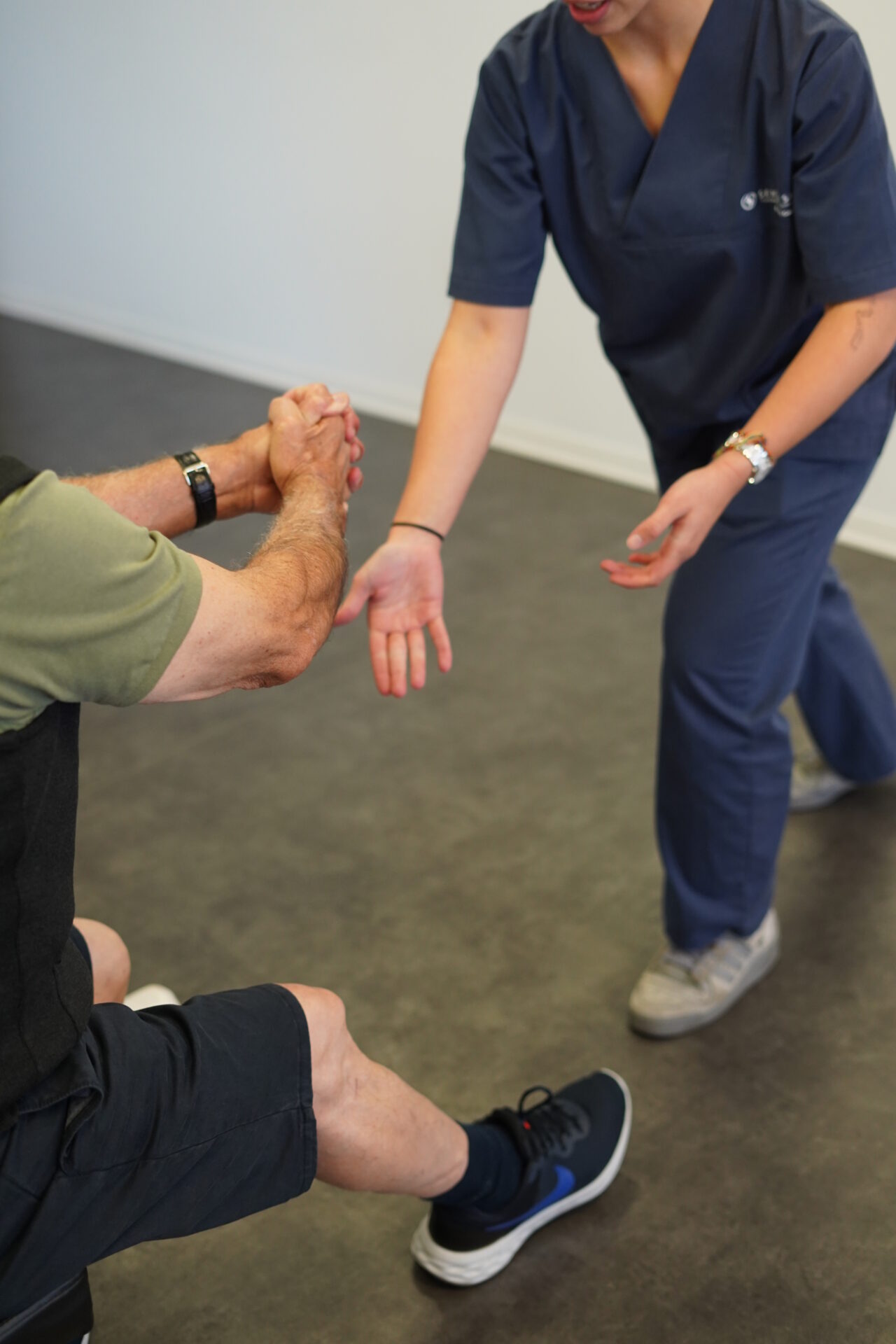
Generic exercise, done without enough load and without progression, gives weak results. This is where working with a physiotherapist makes a difference: exercise is prescribed, measured and increased at the pace the knee allows.
The wear cannot be reversed, but pain and function respond to treatment in most cases.
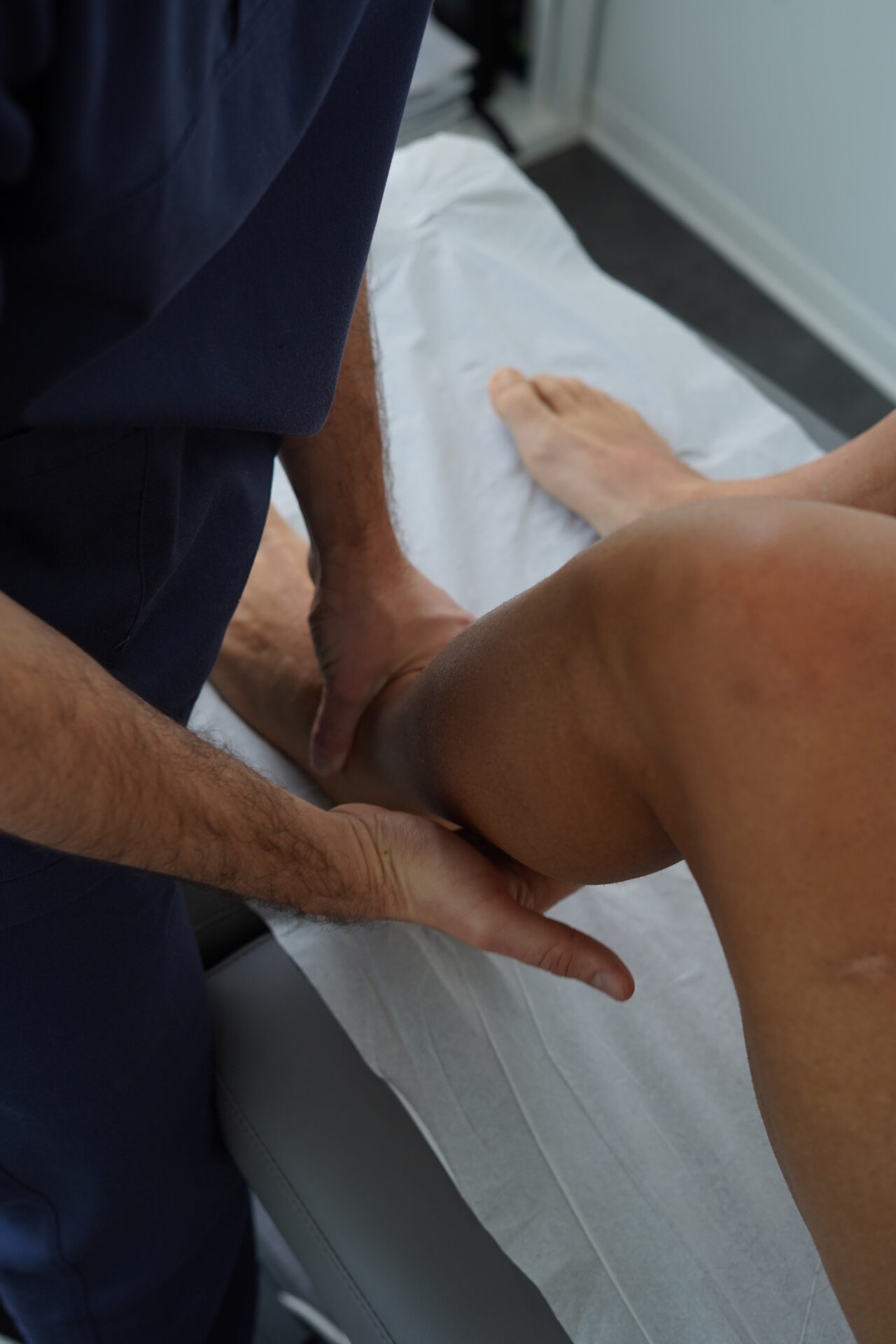
A physiotherapy plan for knee osteoarthritis is not a list of exercises handed to you on the way out. It includes:

Some technologies can be used as a complement to control pain and support rehabilitation. It is worth being clear about where each one stands.
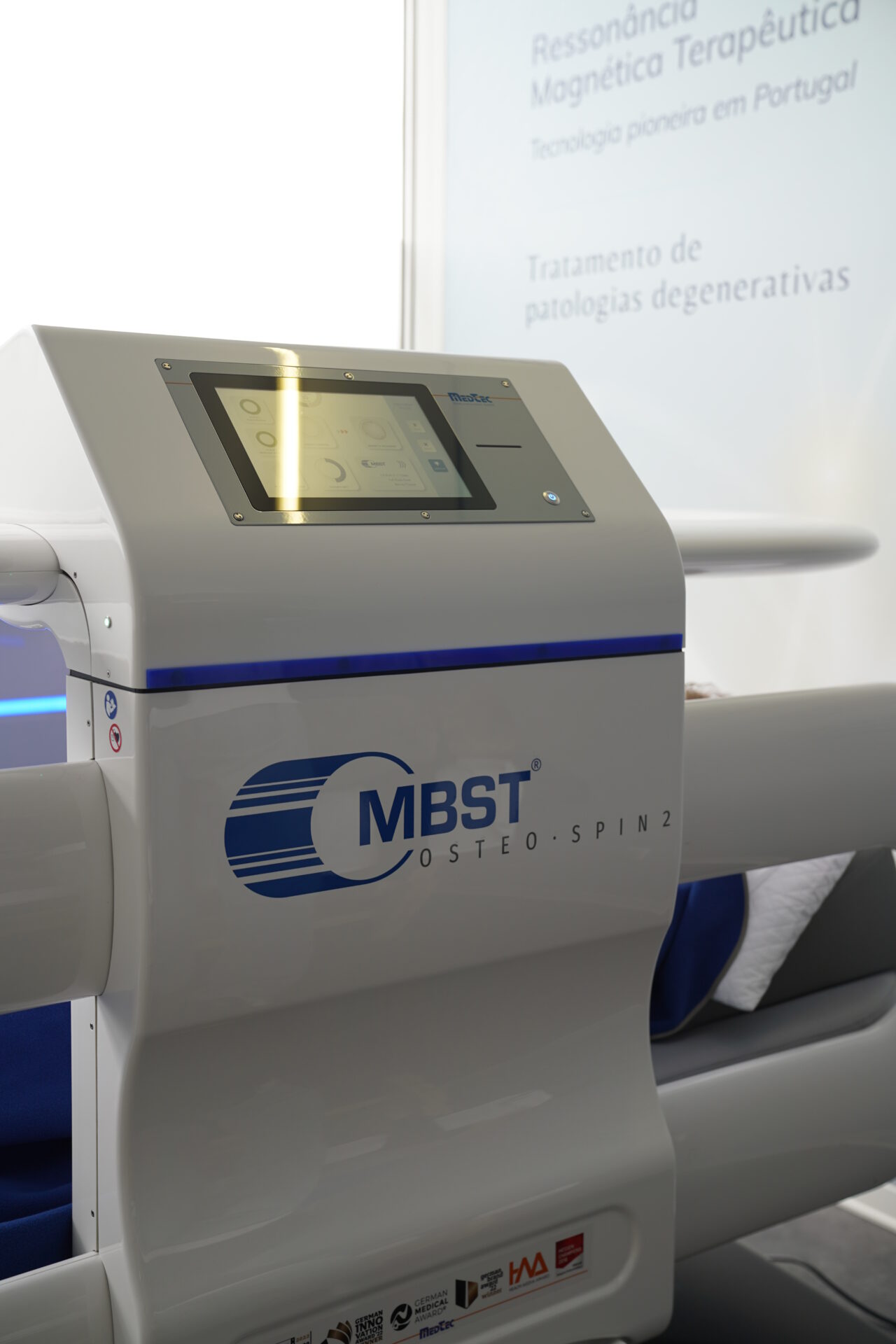
Used mainly to control symptoms and to prepare for exercise. The evidence is mixed and the effects tend to be short to medium term, which makes them useful as support, not as the basis of treatment.
None of these approaches regenerates lost cartilage or makes osteoarthritis disappear. The aim is different, and legitimate: to reduce pain, restore function and delay or avoid surgery while there is clinical room to do so.
Some options are outside the scope of physiotherapy and are decided by your doctor: pain relief and anti-inflammatories, corticosteroid injections, hyaluronic acid injections and, in specific situations, other invasive approaches. We work alongside those decisions, never in place of them.
Knee replacement is an operation with good results when it is properly indicated. It is worth discussing when pain is disabling despite well-delivered conservative treatment, when there is a significant loss of quality of life or marked functional limitation, or when the wear is advanced and the joint no longer responds.
The words that matter in that sentence are “well-delivered”. Some of the people who reach an orthopaedic appointment have never done an exercise programme with the right dose and progression.
It can. The wear cannot be reversed, but pain and function respond to treatment in most cases.
It is the opposite. Controlled load is a stimulus for the joint and for the muscle that protects it.
The later you start, the more strength and mobility there is to recover, and the longer the road.
No. It is a structural change that cannot be reversed. What can be treated, in most cases with good results, are the pain, the stiffness and the loss of function that come with it.
In many cases surgery can be delayed, sometimes for years, and some people never need it. In other cases a replacement turns out to be the best decision. It would not be honest to promise either outcome before an assessment.
Exercise programmes for osteoarthritis usually show changes after six to twelve weeks of consistent work. Some symptoms ease sooner; strength can take at least 4 weeks to improve.
In most cases, yes, and it is recommended. What changes is the amount and type of activity during the more painful phases. That adjustment is part of the plan.
MBST is a therapeutic technology that can be considered in the care of some joint conditions. It does not eliminate osteoarthritis or replace physiotherapy, therapeutic exercise or medical follow-up. At Sentir Saúde we assess each case and explain whether it makes sense to consider it, what the realistic goals are and how it fits into the care plan.
No, you do not need one to book an assessment. If you already have scans or are being followed in orthopaedics or rheumatology, bring that information: rehabilitation complements medical care.
It is worth understanding what was done. Often the exercise did not have enough load or progression, or the programme stopped too early. That is not always the answer, but it is the first thing to look at.
Coming from abroad? See our Premium Recovery Programme.
An assessment shows what stage the osteoarthritis is at, how much strength and mobility you have and what you can realistically expect from a conservative plan. If we conclude that surgery is indicated, we will tell you and refer you.
Avenida de Portas Fronhas 300, 4480-004 Vila do Conde, Portugal · geral@sentirsaude.pt
This article is for information only and does not replace an in-person clinical assessment. Whether any treatment is appropriate always depends on an individual assessment of each case.